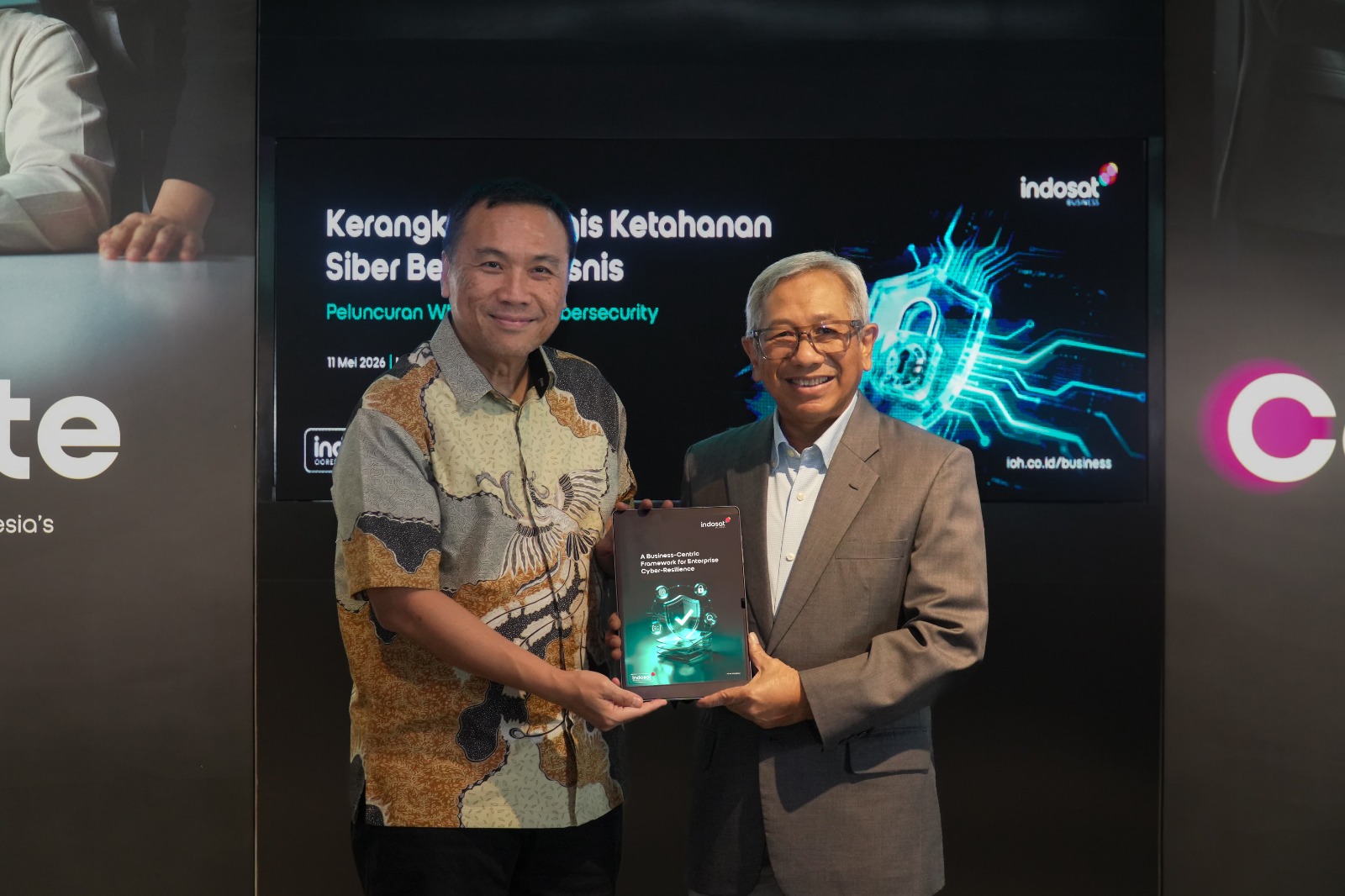
Indosat Business has released a new whitepaper calling for Indonesian organisations to take a more strategic approach to cyber resilience, as AI-enabled fraud and other enterprise cyber threats increase alongside national digitalisation.
The company said Indonesia’s digital economy is projected to reach USD 340 billion by 2030, driven by adoption of AI, cloud, IoT, fintech and other digital systems, but that the same trends are widening the attack surface and increasing the scale and complexity of cyber risk.
The whitepaper, titled “A Business-Centric Framework for Enterprise Cyber-Resilience”, was produced with cybersecurity expert Dr. Ir. Charles Lim, Deputy Head of the Master IT program at Swiss German University. It focuses on what it describes as a “resilience gap”, where the pace of digital transformation outstrips organisational readiness to build cyber resilience.
Muhammad Buldansyah, Director and Chief Business Officer at Indosat Ooredoo Hutchison, said cyber resilience should be treated as a business continuity issue. “Indonesia is entering a new phase of the digital economy, but digital growth must also be accompanied by adequate cyber resilience. Today, cyber resilience is no longer merely a technology issue, but a foundation of trust and business continuity,” he said.
Lim said AI-enabled fraud and deepfakes are contributing to faster-evolving threats that are harder to detect, requiring organisations to move away from reactive security approaches. “Cyber threats are evolving much faster and becoming increasingly difficult to detect, particularly with the emergence of AI-enabled fraud and deepfakes. Organizations need to shift from reactive approaches toward more adaptive and sustainable cyber resilience,” he said.
Indosat Business cited findings in the whitepaper that recorded a 1,550% increase in AI-related fraud within Indonesia’s fintech sector, including deepfakes and AI voice impersonation used for identity-based fraud.
It also referenced Cisco’s Cybersecurity Readiness Index 2025, which it said found only 11% of organisations in Indonesia are considered ready to face modern cybersecurity threats. Indosat Business added that the average financial impact of a data breach in Indonesia can reach approximately IDR 15 billion.
The release also points to regulatory pressure from Indonesia’s Personal Data Protection Law (UU PDP), saying organisations are being pushed to strengthen real-time monitoring and response, including meeting incident reporting obligations within 72 hours.
Indosat Business said the whitepaper discusses approaches such as Zero Trust Architecture and “Human Firewall”, and looks at cyber resilience challenges across sectors including financial services, manufacturing, government and education.