Malaysia’s New Industrial Master Plan 2030 (NIMP 2030) sets a direction for shifting the country’s manufacturing sector towards higher-value production, digitalisation and productivity, but industry leaders say the next phase will depend as much on workforce capability and operating models as on technology investment.
In a bylined commentary distributed to media, Coca-Cola Bottlers Malaysia-Singapore-Brunei argues that while automation, data and digital systems have improved factory performance over the past decade, technology alone is no longer a differentiator as adoption becomes more widespread.
The commentary says a common misconception is that modern manufacturing technology replaces workers, when it more often changes roles and expectations. It points to growing demand for workers who can interpret data, solve problems and make faster decisions on the production floor, framing capability-building as a parallel priority to capital investment.
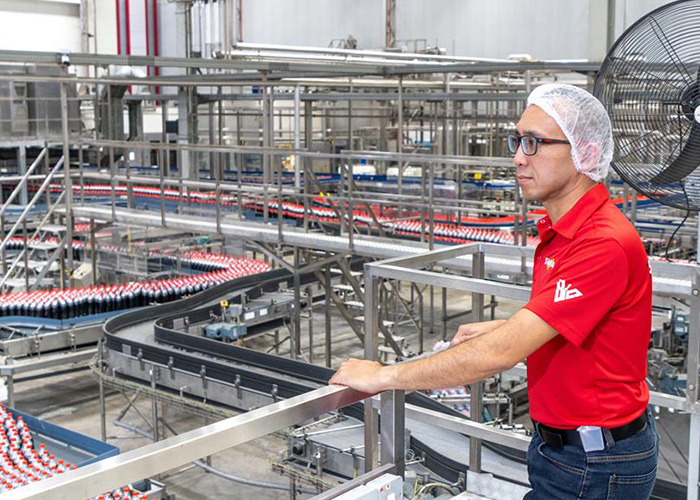
Using its Bandar Enstek manufacturing and distribution hub as an example, the company describes a 15-year shift towards more advanced operations, saying each technology rollout required concurrent changes in skills, processes and day-to-day ways of working.
It cites its Automated Storage and Retrieval System (ASRS) as a high-throughput, high-density warehouse solution within Coca-Cola’s Southeast Asia operations, saying it altered production planning, inventory management and warehouse coordination, and shifted staff activity towards system optimisation, data analysis and operational decision-making.
The company also points to its adoption of Power BI for operational reporting, saying the platform consolidates production, maintenance, quality and utility data to support real-time monitoring and faster decision-making, and aims to improve cross-functional collaboration by aligning teams around shared operational data.
Beyond productivity, the commentary links operational excellence to sustainability and resilience, arguing that reducing inefficiencies can lower energy use, water consumption and waste alongside improving output.
It claims electricity consumption at the Bandar Enstek site has been reduced by about 66,000 kWh per month through engineering optimisation projects, including changes to air handling units, compressors and chiller systems, and says onsite solar generation supplies around 30% of the plant’s electricity demand.
Looking across the national agenda, the commentary says meeting NIMP 2030 objectives will require continued investment from industry and government, as well as closer collaboration with education institutions so workforce skills keep pace with manufacturing’s changing needs.