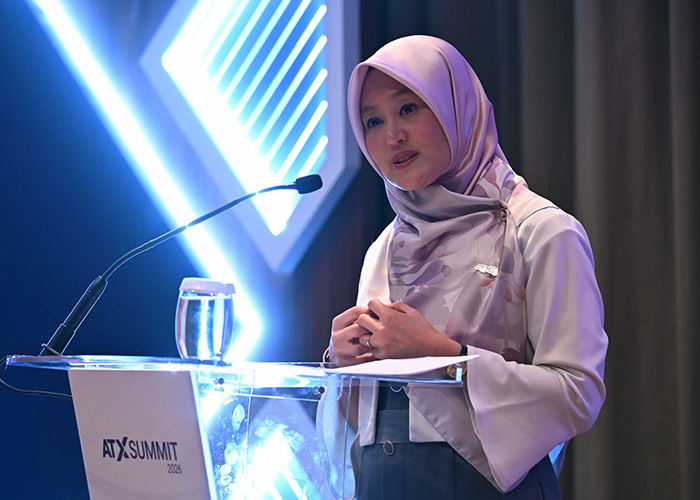
Singapore’s Minister of State for Digital Development and Information & Health, Mdm Rahayu Mahzam, used her opening remarks at the AI in Health x ATxSummit on 19 May 2026 to frame artificial intelligence as part of the country’s response to population ageing, while pointing to new partnerships and governance measures intended to support safe adoption in clinical settings.
In her speech, Mahzam said Singapore’s “strong digital foundations” in healthcare IT and data infrastructure, alongside institutional trust, have positioned the country to pursue what she described as AI transformation in healthcare. She linked that ambition to the session theme, “Smart Nation to Blue Zone Nation”, referencing “Blue Zones” such as Okinawa, Sardinia and Nicoya as examples of communities associated with longer life spans.
Mahzam said demographic pressures are intensifying, citing projections that by 2030 Singapore will have more seniors than children for the first time, with one in four residents aged 65 or older. She argued that the policy challenge is shifting from extending life expectancy to improving healthy years, describing prevention and community care as priorities alongside data-driven detection of health patterns and earlier intervention.
The minister also pointed to two memoranda of understanding signed at the event. The first is between Singapore General Hospital and A*STAR’s Diagnostics Development Hub, a collaboration she said has supported three innovations to date: an in-vitro Antibiotic Combination Test (iACT) intended to help clinicians select antibiotic combinations, a digital drawing application called PENSIEVE-AI aimed at identifying early memory problems in seniors, and HealthVector Diabetes, a “digital twin” model designed to estimate chronic kidney disease risk in people with type 2 diabetes.
The second MOU is between SingHealth and Bhutan’s Gyalpozhing College of Information Technology, part of the Royal University of Bhutan. Mahzam said the partnership includes development of an AI-assisted chest radiograph model trained on Bhutanese data to support diagnosis of lung diseases, including infections and cancer, in rural hospitals. She said the model is built on MerMED-FM, which she described as co-developed by SingHealth and A*STAR.
Beyond product development, Mahzam said the SingHealth-GCIT partnership will also cover guidelines, educational programmes and regulatory frameworks on responsible use of AI in healthcare, tailored to Bhutan’s context.
On governance, Mahzam cited what she described as the need for rigour in assessing and governing AI as systems take a larger role in healthcare delivery. She highlighted SingHealth’s S.C.O.R.E. framework—standing for “Safety, Context & Consensus, Objectivity, Reproducibility, and Explainability”—as an approach for evaluating large language model outputs and AI-generated responses in clinical settings. She said clinical teams across SingHealth have applied the framework to assess tools including medication enquiry chatbots and AI systems used to assist specialists during consultations, as well as to validate clinical decision support models prior to deployment.
Mahzam also referred to Singapore government guidance including the AI in Healthcare Guidelines (AIHGle) and the Model AI Governance Frameworks, describing them as part of efforts to support safe and responsible AI deployment.
In closing, she emphasised what she called the Smart Nation goals of “Trust, Growth, and Community”, arguing that progress in AI-enabled healthcare depends on collaboration between clinicians, researchers, technologists, policymakers, industry leaders and patient advocates, and on bridging technical capability with clinical realities.